
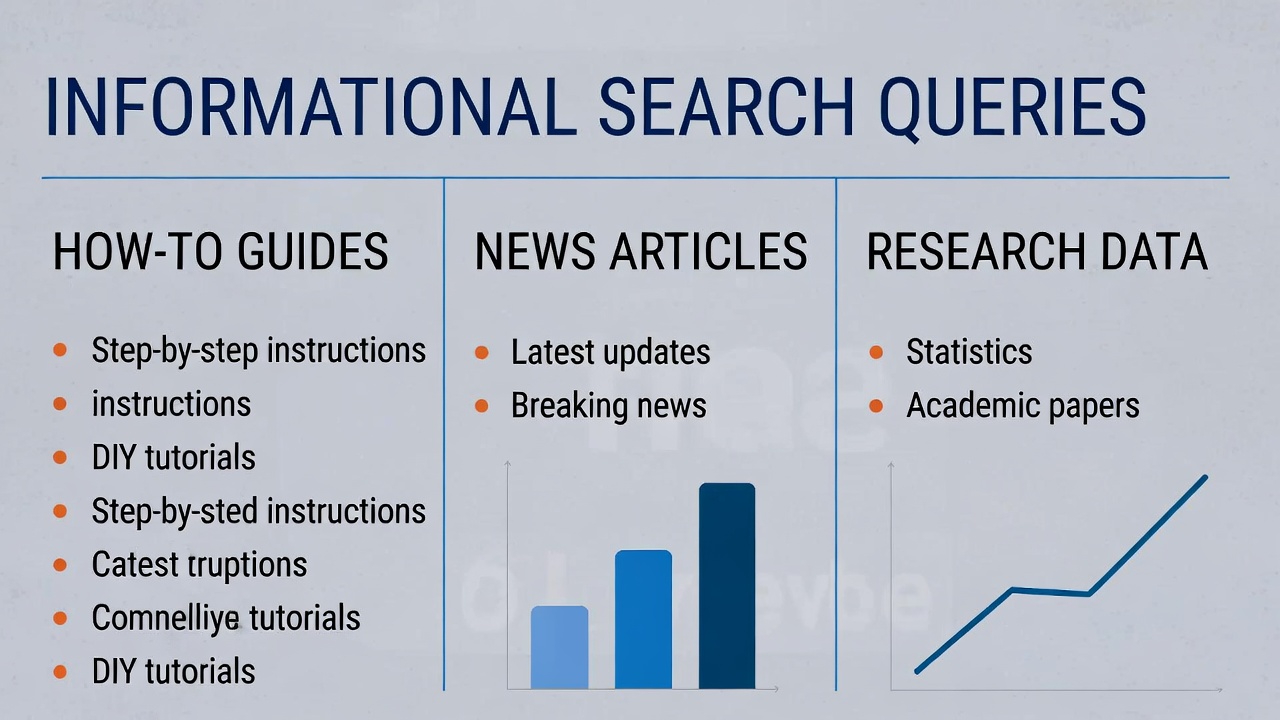
Introduction:
In the fast-paced world of digital marketing, understanding user intent is critical to creating content that drives traffic, engagement, and conversions. Among the various types of search queries, informational search queries stand out as a cornerstone of content strategy. These are queries where users are seeking knowledge, answers, or insights rather than aiming to make a purchase or take immediate action.
In this comprehensive guide, we’ll explore what informational search queries are, why they matter, how to identify them, and how to optimize your content to leverage these queries effectively.
What Are Informational Search Queries?
Informational search queries are searches made by users who are looking to gather information. The primary goal behind these queries is knowledge acquisition. Users conducting these searches might want answers to questions, solutions to problems, explanations of concepts, or general knowledge about a topic.
Examples of informational search queries include:
-
“What is blockchain technology?”
-
“How does photosynthesis work?”
-
“Benefits of meditation for mental health”
-
“Tips for writing a resume”
These queries differ from navigational queries, where users search for a specific website or page, and transactional queries, where the intent is to purchase or take a specific action.
Key Characteristics of Informational Queries:
-
Curiosity-driven: The user wants to learn something.
-
Non-commercial intent: The user is usually not ready to buy anything.
-
Question-based: Often starts with words like “how,” “what,” “why,” or “tips.”
-
High search volume: Common questions can attract large amounts of traffic.
Understanding these characteristics allows marketers and SEO professionals to create content that directly addresses user needs.
The Importance of Informational Search Queries for SEO
Informational queries play a vital role in SEO and content marketing strategy for several reasons:
1. Drives Organic Traffic
By targeting informational queries, you can attract users in the early stages of the buyer journey. While they may not be ready to make a purchase, providing valuable content increases the likelihood they will return to your site when ready to convert.
2. Establishes Authority
High-quality content that answers questions effectively builds your brand’s authority and trust. Search engines like Google favor websites that provide informative, reliable, and comprehensive answers to user queries.
3. Improves Engagement Metrics
Informational content tends to keep users on your page longer, increasing dwell time and reducing bounce rates—both important SEO ranking factors.
4. Enhances Keyword Strategy
Informational search queries often include long-tail keywords, which are less competitive and easier to rank for, while still driving targeted traffic.
5. Supports Content Marketing Funnels
Informational queries allow brands to capture users at the top of the funnel (TOFU). By offering valuable information, you nurture potential leads who may later move down the funnel toward conversion.
Types of Informational Search Queries
Informational search queries can be categorized based on the type of information the user is seeking. Understanding these types helps in crafting highly relevant content.
1. Definition Queries
Users want to know what something means or refers to.
Example: “What is SEO?”
2. How-to Queries
Users seek step-by-step instructions or guidance.
Example: “How to create a content calendar?”
3. Tips and Advice Queries
Users look for professional advice, best practices, or suggestions.
Example: “Tips for improving website speed”
4. Comparison Queries
Users compare products, services, or methods.
Example: “Android vs iOS performance comparison”
5. Educational Queries
Users aim to understand complex topics or gain deep insights.
Example: “Explain quantum computing in simple terms”
How to Identify Informational Search Queries
Identifying informational search queries is essential for creating content that meets user intent. Here are the best strategies:
1. Use Keyword Research Tools
Tools like Ahrefs, SEMrush, Moz, and Google Keyword Planner can help identify informational keywords. Look for queries with:
-
High search volume
-
Low to medium competition
-
Words like “how,” “what,” “why,” “tips,” or “guide”
2. Analyze Google Autocomplete
Start typing a query in Google, and pay attention to the suggested autocomplete results. These suggestions reflect popular informational queries that people search for.
3. Explore “People Also Ask” Boxes
Google’s “People Also Ask” section is a goldmine for discovering related informational questions. These boxes provide insight into what users want to know beyond your initial query.
4. Check Forums and Q&A Sites
Websites like Quora, Reddit, and Stack Exchange provide direct examples of informational queries. You can see the exact questions people are asking in your niche.
How to Optimize Content for Informational Search Queries
Optimizing content for informational queries requires a strategic approach that focuses on user intent, readability, and search engine signals.
1. Create Comprehensive Content
Your content should fully answer the query. Longer, in-depth posts that cover all aspects of a topic are more likely to rank higher in search results.
2. Use Structured Formatting
Break content into headings, subheadings, and bullet points to improve readability. Use H2 and H3 headings to structure content around questions and subtopics.
3. Include Related Keywords
Use LSI (Latent Semantic Indexing) keywords and synonyms naturally within your content. This helps search engines understand the context of your content and improves ranking for multiple queries.
4. Incorporate Visuals
Use infographics, images, and videos to enhance the explanation of complex topics. Visual content increases engagement and makes information easier to digest.
5. Answer Questions Clearly
For informational queries, clarity is crucial. Provide concise answers at the beginning of the section, followed by a detailed explanation for users who want deeper insights.
6. Optimize for Featured Snippets
Google often displays featured snippets for informational queries. Format your content to increase the chance of being featured:
-
Use bullet points or numbered lists
-
Start with a short, clear answer
-
Use tables for comparisons or data
7. Improve Internal Linking
Link to related informational content within your website. Internal linking boosts SEO, keeps users on your site longer, and helps search engines understand content hierarchy.
Examples of Informational Search Queries in Different Industries
1. Technology
-
“What is artificial intelligence?”
-
“How to secure a Wi-Fi network?”
-
“Best programming languages to learn in 2026”
2. Health & Wellness
-
“Benefits of yoga for stress relief”
-
“How does intermittent fasting work?”
-
“What vitamins are essential for immunity?”
3. Finance & Business
-
“How to create a budget plan”
-
“Difference between stocks and bonds”
-
“Tips for small business marketing”
4. Travel & Lifestyle
-
“Best places to visit in Japan”
-
“How to pack for a week-long trip”
-
“Travel safety tips for solo travelers”
5. Education & Learning
-
“How to improve study habits”
-
“What is the best method to learn a new language?”
-
“Top online learning platforms”
Measuring the Impact of Informational Content
To ensure your content strategy for informational queries is effective, track performance using analytics tools. Key metrics include:
-
Organic Traffic: Monitor how many users find your content through search engines.
-
Bounce Rate: Lower bounce rates indicate that your content satisfies user intent.
-
Dwell Time: Longer time spent on page suggests engagement and usefulness.
-
Search Ranking: Track keyword positions for informational queries.
-
Click-through Rate (CTR): Optimize meta titles and descriptions to improve CTR from search results.
Best Practices for Targeting Informational Search Queries
-
Understand Your Audience: Conduct surveys or use analytics to learn what questions your audience is asking.
-
Focus on Quality Over Quantity: High-value content outperforms numerous low-quality articles.
-
Update Content Regularly: Refresh your content to ensure information stays accurate and relevant.
-
Use Conversational Tone: Informational content should be easy to read and approachable.
-
Combine Content Formats: Blog posts, videos, infographics, and podcasts can all target informational queries.
Conclusion
Informational search queries are a vital component of modern SEO strategy. They allow brands to attract users in the early stages of their journey, establish authority, and boost engagement. By understanding user intent, researching popular queries, and optimizing content for clarity, structure, and relevance, businesses can capture organic traffic and convert it into loyal customers over time.
Whether you are a content marketer, SEO professional, or business owner, leveraging informational search queries effectively can give your website a competitive edge in search engine rankings and drive sustained growth.
